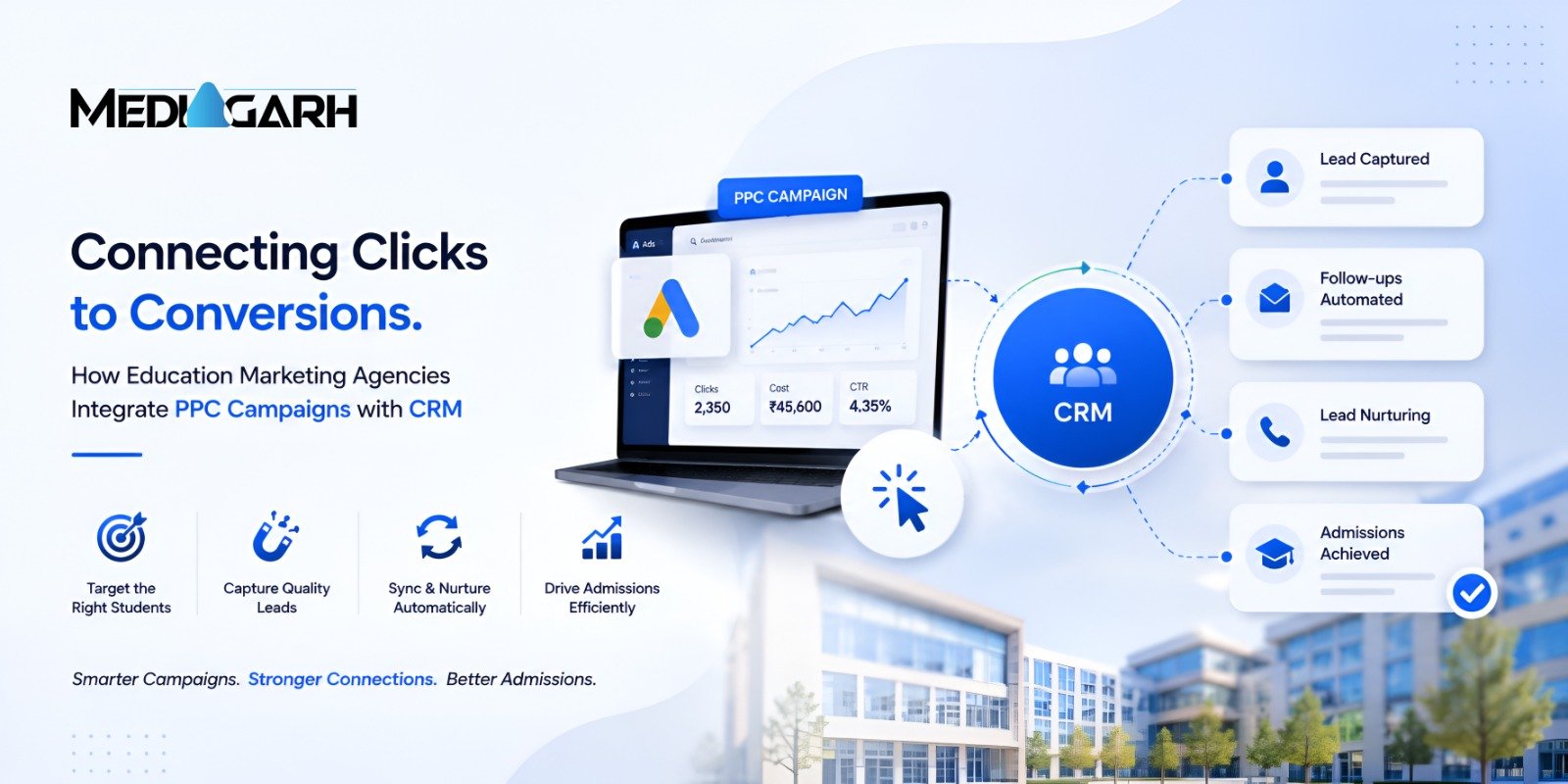
If you are involved in education marketing for a school or college, you must deal with the following terms on a regular basis: PPC & CRM. Their application is very clear:
- PPC – Pay Per Click advertising for generating admission leads
- CRM – Customer Relationship Management software for admission lead management
The newest marketing trends bring out a very interesting observation. Institutions are more concerned about the lead management part than the lead generation. Because, with the quantum of experience available today, most have cracked what the best-performing education campaigns are. But they are still struggling with good integrated efforts that combine PPC and CRM. Isolated efforts supposedly aren’t expected to bring in admissions. In fact, educational institutions have started delegating this integration to marketing agencies. But why is that? What’s going on behind this integration and why has it become so important? That’s what we are discussing today.
Why PPC Alone Doesn’t Drive Admissions
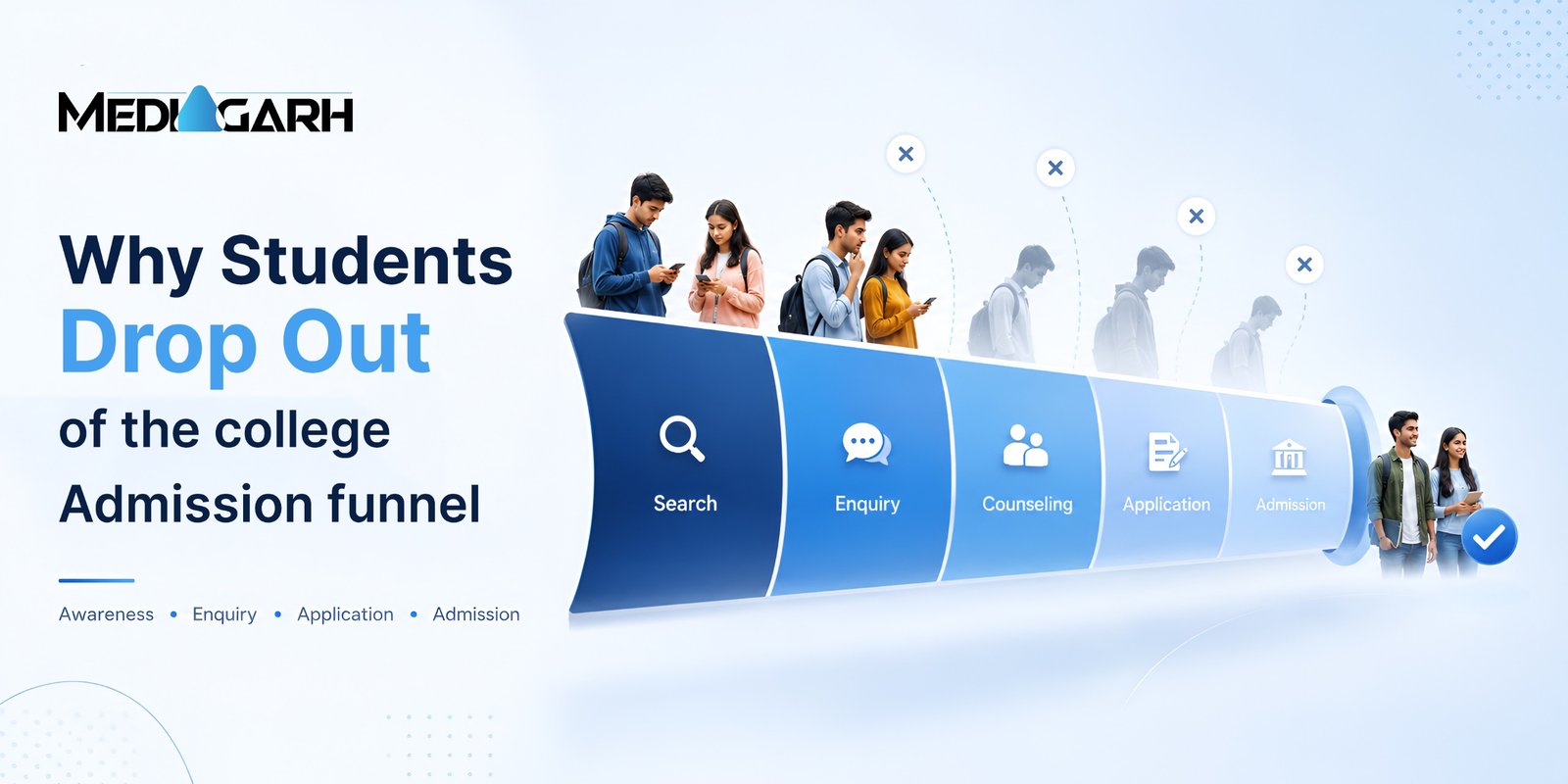
Most educational businesses think that a lead’s admission journey looks very straightforward. Thinking that advertising will directly lead to admissions. However, the reality is completely different. It looks more like:
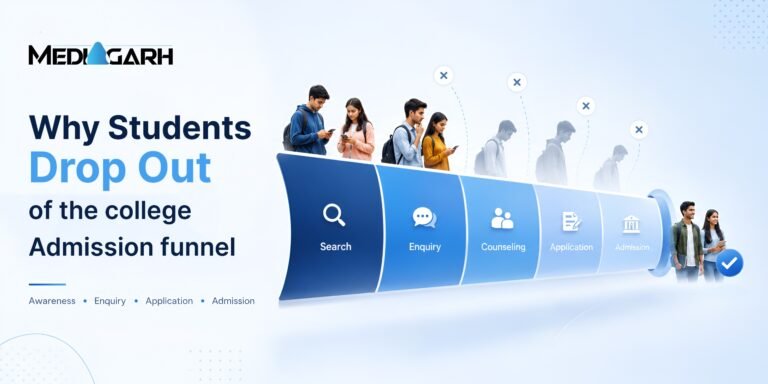
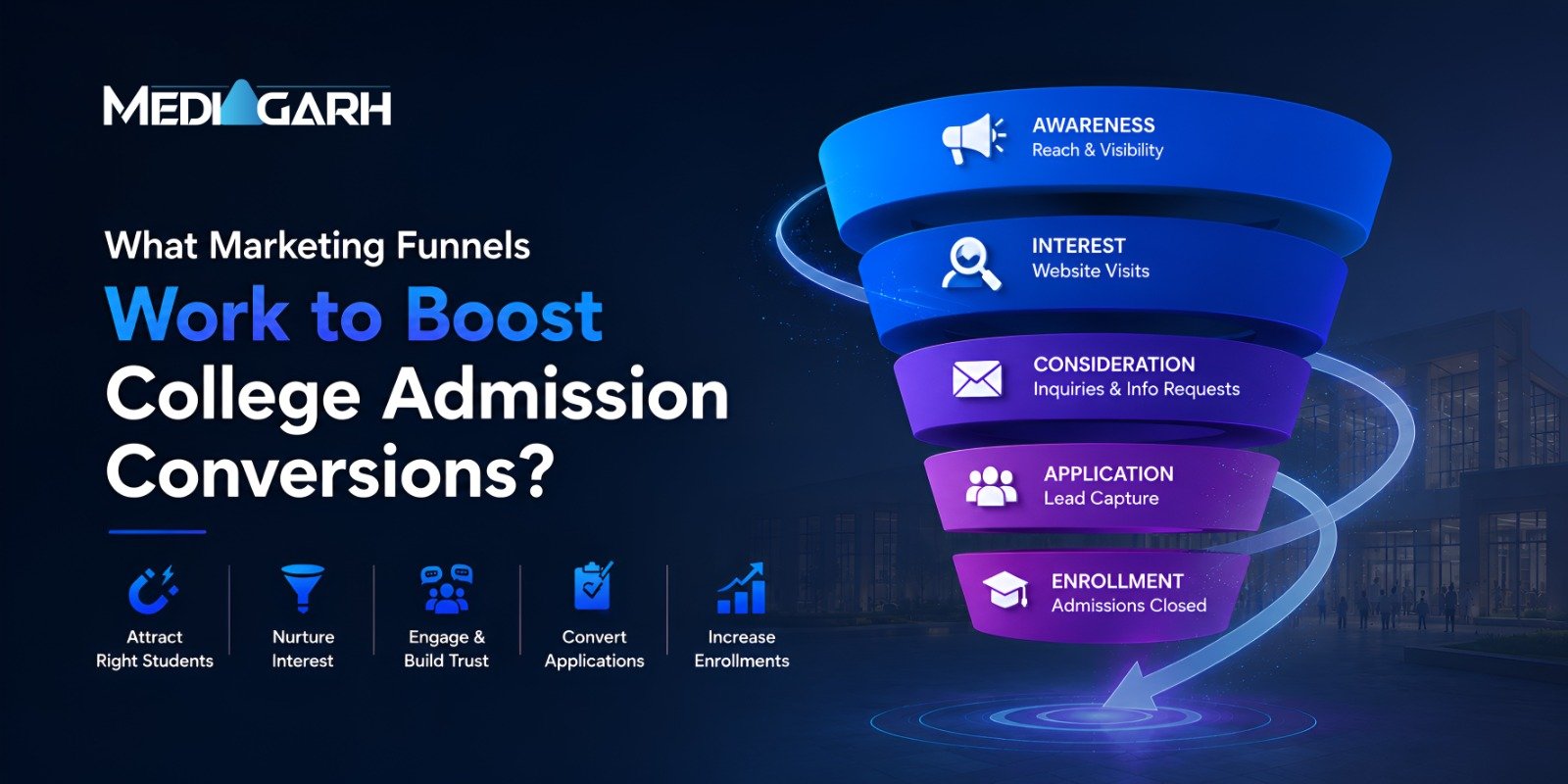
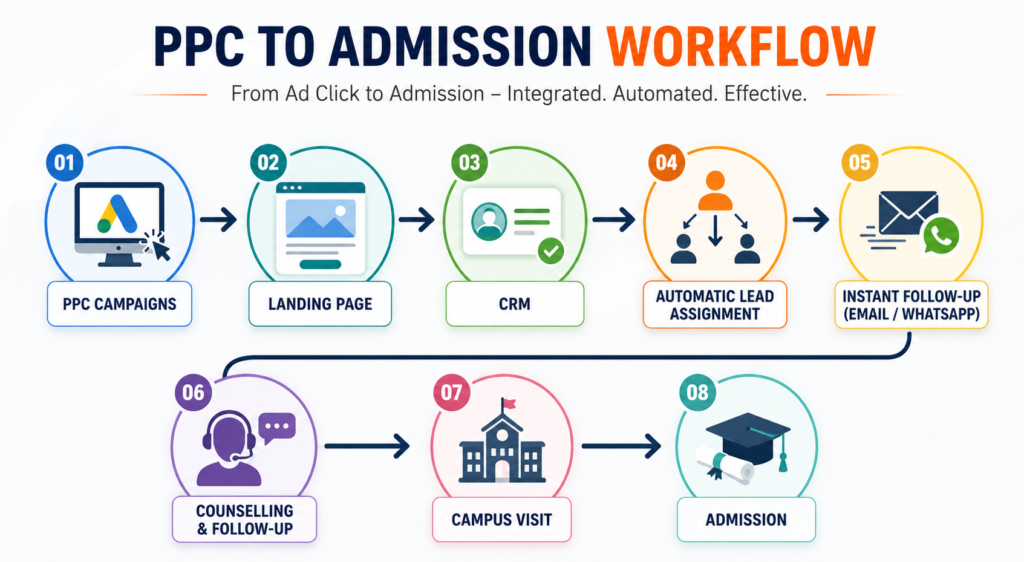
PPC Campaign → Lead → Follow-up → Counselling → Campus Visit → Admission
You need to get comfortable with the fact that a paid campaign can only generate interest and enquiries. But what leads to admission is dictated by the process followed after that lead hits the CRM. You drop any element from the above journey, and you’ll see a massive drop, making advertising useless.
What Is a CRM for Educational Institutions?
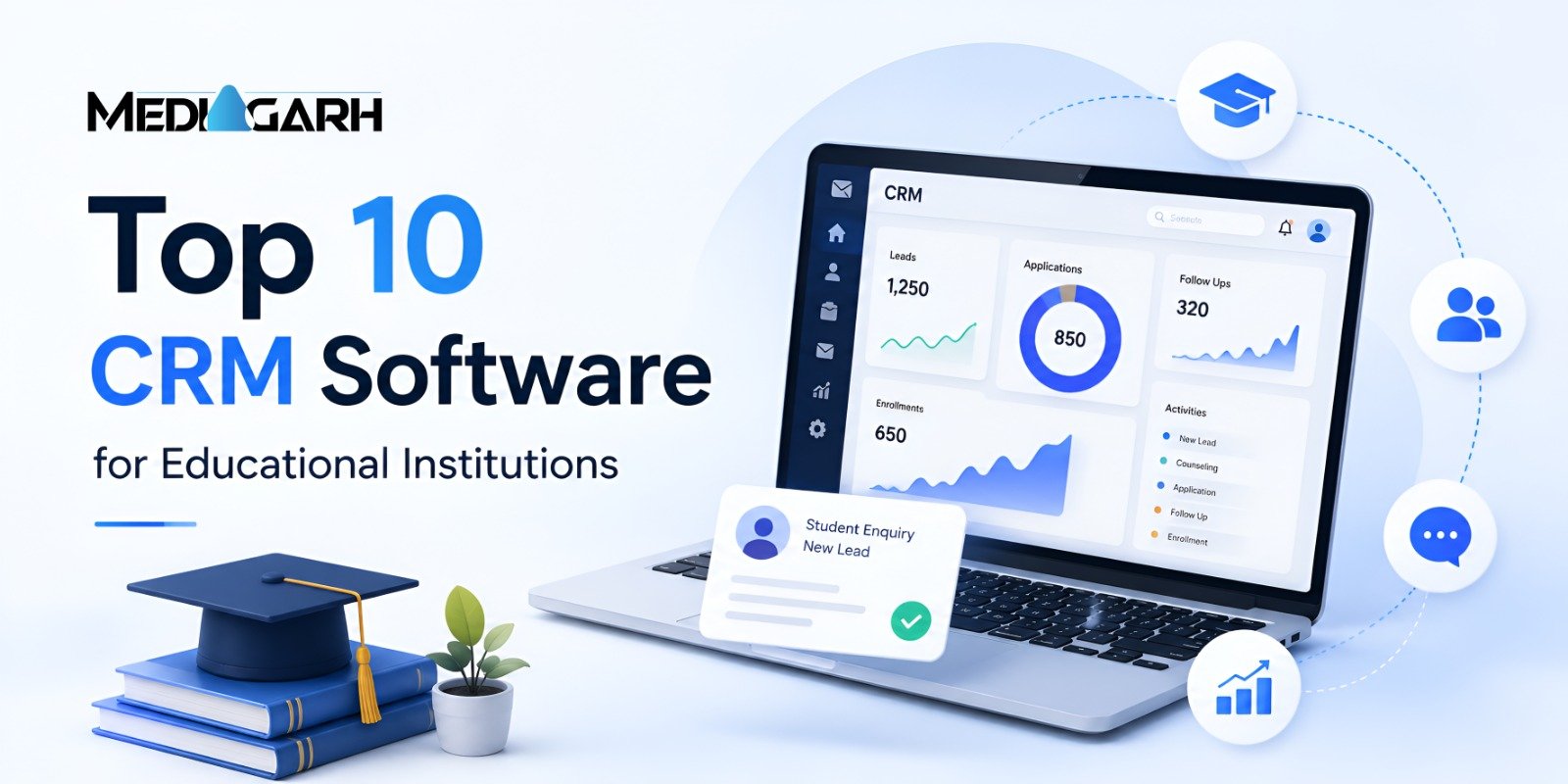
A CRM, or customer relationship management, is a software that helps schools and colleges keep track of admission leads, generally generated by advertising campaigns. It should not be confused with traditional Google Sheets-based lead management. CRM is a complete system and helps institutions:
- Capture enquiries automatically
- Assign leads to counsellors
- Track every interaction
- Schedule follow-ups
- Automate communication
- Measure conversion performance
What Happens Without CRM Integration?
Let’s just say that your institution doesn’t have a CRM. Here are all the problems you’ll be dealing with:
- Manual Lead Entry: Every lead generated by Google, Meta, etc. would need to be manually input into a sheet and shared with the counsellors. Valuable Time ↓ Errors ↑
- Delayed Follow-Ups: If counsellor follow-ups fail for several hours or a single day, your lead might already be lost to competitors.
- Duplicate Communication: Without a central system in place, the same lead might be nurtured by multiple counsellors while other leads receive no communication, catering poor experience.
- Lost Enquiries: Disappeared leads, missed emails, unattended forms, forgotten phone calls—all are potential admissions that never materialized.
- Limited Visibility: Absence of integrated efforts means loss of insightful information like high-performing campaigns, counsellors, and programs.
How Education Marketing Agencies Integrate PPC With CRM
Step 1: Education Lead Generation Through PPC Campaigns
Publish targeted advertising campaigns through Google or Meta ads and generate admission leads, possibly with optimized landing pages.
Step 2: Automatically Push Every Lead Into the CRM
APIs and industry-specific connectors allow direct lead transfer to the software without any sheet scraping. It removes any possible delays or human errors.
Step 3: Automatically Assign Leads
Depending on the system set-up by you, different counsellors can be assigned specific leads. The assignment might be based on:
- Course selected
- Campus location
- City
- Program type
Step 4: Send an Instant Response
Modern CRMs also help with automation. Basically, as soon as the lead hits the CRM, a tailored message can be sent through email, WhatsApp, or SMS. It is necessary to always be in the audience’s minds.
Step 5: Track Every Interaction
The CRM keeps track of all data, including:
- Phone calls
- Emails
- WhatsApp conversations
- Counselling sessions
- Follow-up reminders
- Campus visit schedules
Step 6: Measure Marketing Performance
CRMs can provide the right indicator of campaign success because it tracks:
- Lead source
- Cost per enquiry
- Cost per admission
- Conversion rate
- Counsellor performance
- Campaign ROI
…providing insightful data.
Popular CRMs Used in Education
The best CRMs for the educational industry include the following:
- Meritto
- LeadSquared
- HubSpot
- Salesforce Education Cloud
Each software offers different capabilities. Choose what makes sense from the perspective of your institution’s size, admission volume, and internal workflow.
Benefits of Integrating PPC Campaigns With CRM
- Faster Lead Response: Fast responses improve conversion chances by 21 times.
- Better Lead Tracking: No enquiry is lost or forgotten.
- Improved Counsellor Productivity: Counsellors don’t spend much time on data organization. All work hours are mainly dedicated to speaking with the leads.
- Lower Lead Leakage: Since everything is managed by a machine, missed opportunities go down with follow-up consistency.
- Smarter Campaign Optimization: CRMs provide structured feedback which can be used for marketing optimizations.
- Better Admission Forecasting: Historical CRM data helps institutions plan future campaigns with greater accuracy.
A Simple PPC-to-Admission Workflow
Final Thoughts
Only focusing on generating leads is an outdated strategy. Modern campaigns require an integrated approach that accounts for timely attention, structured follow-ups, and consistent communication with leads. This is where CRM integration becomes integral. This guide was an end-to-end thesis about why the top higher education marketing agencies, for instance, are prioritizing the integration. Because in education marketing, success isn’t measured by the number of clicks your advertisements receive. It’s measured by how many of those clicks become students