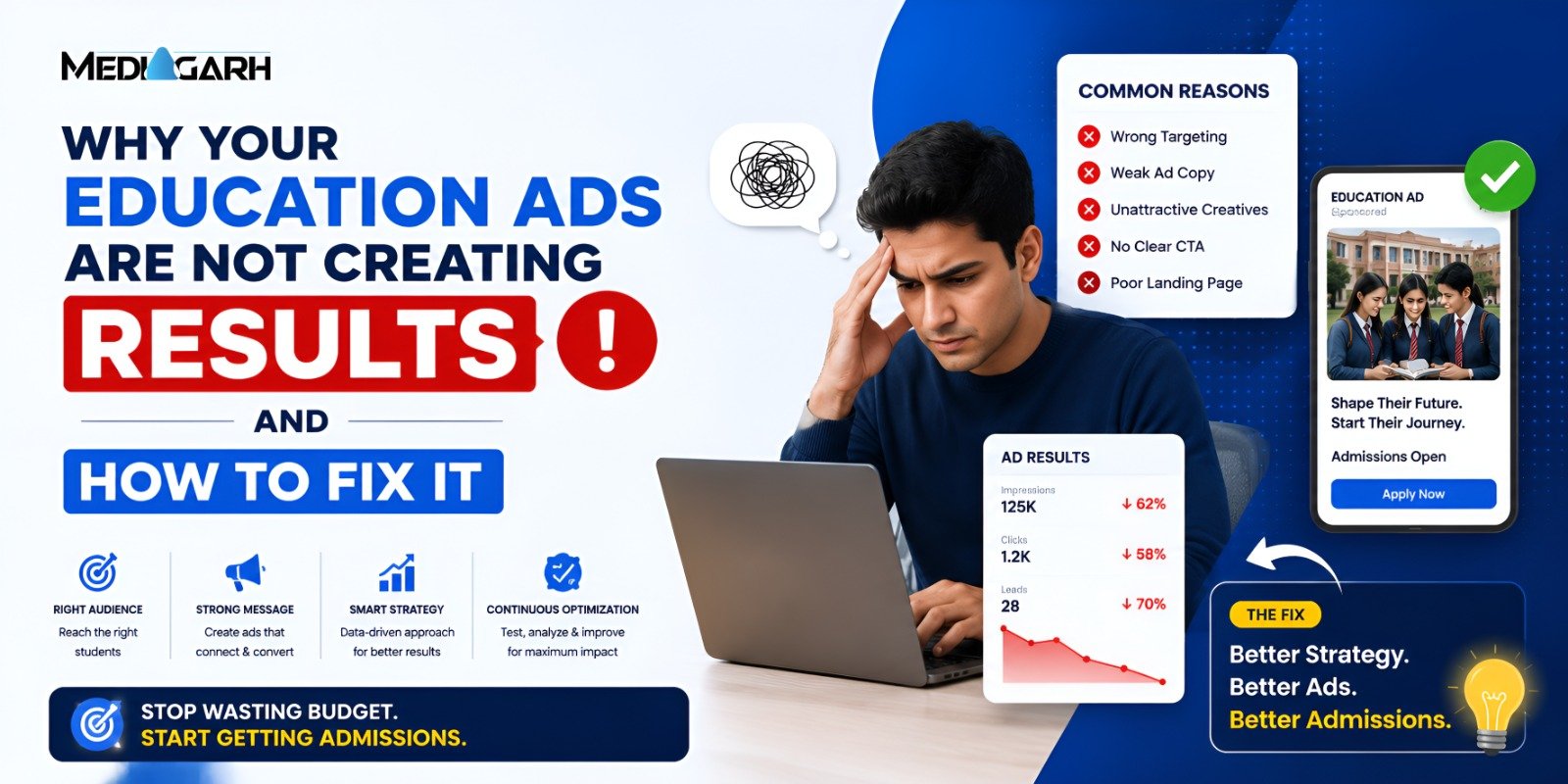
Is this scenario familiar: you publish a campaign where everything looks good, but weeks after it goes live, results look underwhelming? Sure, there will be impressions, maybe clicks too, but the real deal—admissions? Those conversion numbers don’t seem to go up. It is among the most common frustrations shared by education marketers, school administrators, and college owners. But there’s a catch to this situation: most education ads fail for a handful of predictable reasons. Yes, we are saying that you don’t need to increase your ad budget to improve admissions leads for colleges.
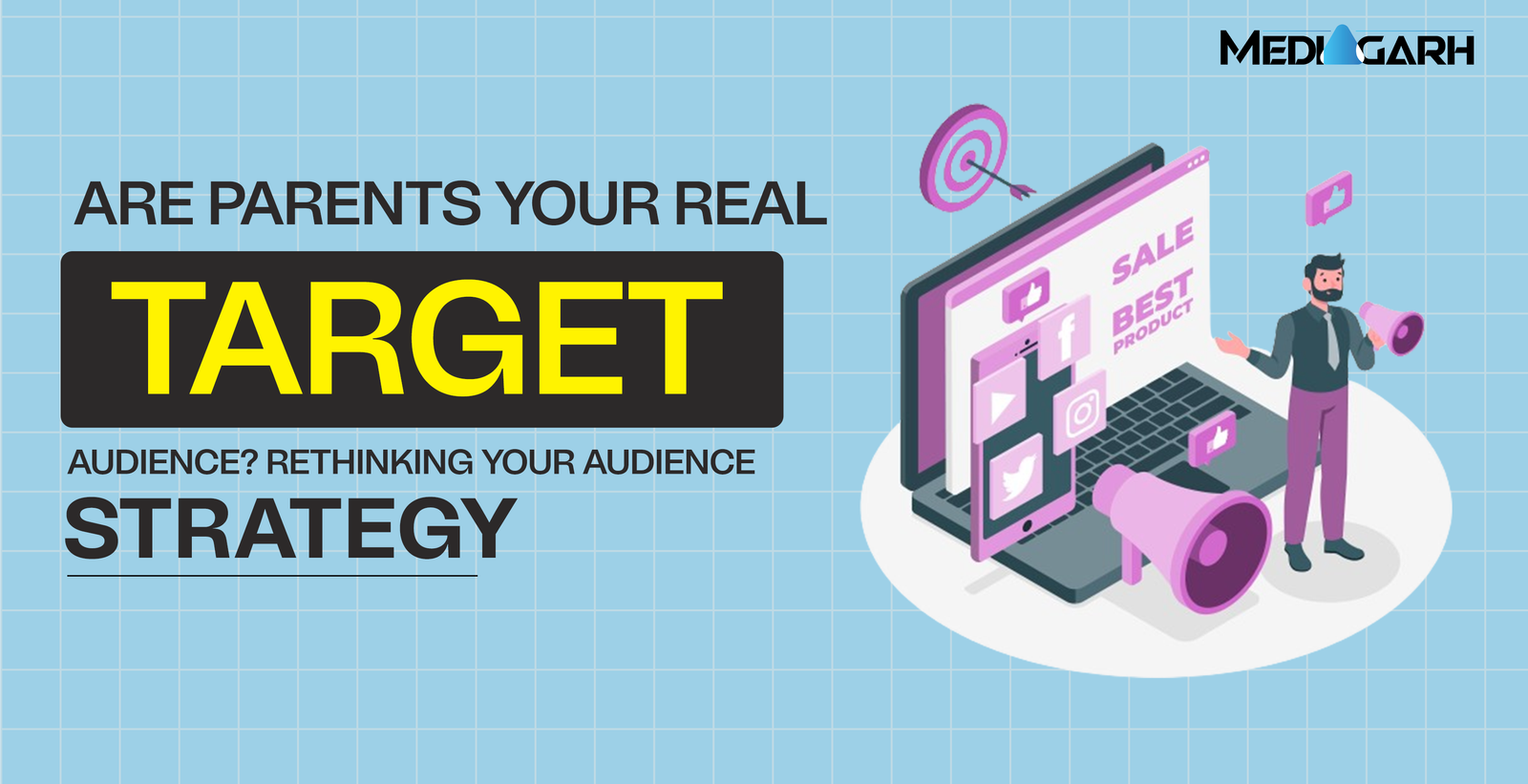
Mistake #1: Targeting the Wrong Audience
It is the most fundamental and stubborn mistake made by educational institutions. They target unrelated audiences instead of decision-makers. Let’s understand this with the following perspective:
In school campaigns, many campaigns target students aged 13-17, but these children are not old enough to make decisions. The real audience in this case should be parents aged 28-45 who generally have children that age.
A similar example for a college would be them targeting complete cities, broad age groups, and generic interests. When you lose the focus, you get irrelevant traffic, low-intent leads, and the ad spend just goes to waste.
However, fixing this issue is simple; you just start asking the right questions:
- Is the student the decision-maker?
- Is the parent involved?
- Which locations matter most?
- What academic stage are they currently in?
…and you’re good to go.

Mistake #2: Generic & Boring Ad Copy
Most education ads sound the same:
- “Admission Open”
- “Apply Now”
- “Limited Seats Available”
There is no issue with using the basic techniques, but it won’t make you stand out in tough competition. Before you even nudge them to become admissions, you have to answer their primary objection: why should I come to your institution?
So, the next time you are publishing an ad, instead of the usual “Admissions Open 2026,” try using:
Industry-Focused MBA Program with Guaranteed Internship Opportunities and 100% Placement Assistance
Mistake #3: Weak Video Creatives
The ad platforms have evolved so much that targeting is being redefined according to the ad creatives. Most of the video creatives have a mere logo animation, drone shots, long campus introductions, and slow background music.
The better way is to choose the talking head format for a video ad for education institutes. And grab the attention of the viewer in the first 3 seconds. You target a very specific pain point of your audience for attention. Grab the attention first, introduce the institution second.
Mistake #4: Sending Traffic to the Homepage
It has been statistically proven that homepages don’t act great as ad landing pages. There are a lot of distractions on the page, and even if you get a lot of people to click on your ads and head over there, you will eventually lose them to some random page. A homepage is for information; ad landing pages shouldn’t solely be informative.
Dedicated landing pages clear program information, showcase benefits, testimonials, an enquiry form, and a strong call-to-action. You set up a flow of communication in your landing page with zero distractions and see the conversion rate shoot up. The simpler the journey, the higher the conversion rate.
Mistake #5: Ignoring Mobile Users
Most parents and students will see your ads and landing pages on mobile. Because it’s their first experience. Even after this basic knowledge, institutes fail to align their pages according to mobile. The following issues arise, offering a bad experience:
- slow loading pages
- difficult forms
- tiny text
- confusing layouts
The fix is to always keep the mobile experience in the first place. Test:
- page speed,
- form usability,
- button placement,
- readability.
Mistake #6: No Retargeting Strategy
Not all leads get converted with initial campaigns. Some audiences need more reassurance. But institutions completely miss this step. Retargeting ads place you at the forefront among competition. But if you miss it, those prospective conversions go into vain.
Retarget the following audiences:
- website visitors
- video viewers
- previous enquiries
- landing page visitors
Creatives for these should include testimonials, student success stories, admission reminders, and campus experiences. Focus primarily on the carousel and video formats for higher rates of conversion.
Mistake #7: Measuring the Wrong Metrics
It makes no sense to track the likes, impressions, reach, or clicks on advertisements. These numbers might look massive on paper, but have no real value.
Instead, track metrics that actually make an impact. A general campaign for social media marketing for schools should track metrics like:
- Cost Per Enquiry
- Lead Quality
- Campus Visit Rate
- Lead-to-Admission Ratio
- Cost Per Admission
Do you understand the difference between both types of metrics? One just tracks visibility, while the other worries about admissions.
Final Thoughts
This guide was to bust down your myths about education advertising. Many platforms and so-called “experts” would suggest you increase the budget whenever your ad efforts are going downhill. But spending more will rarely solve strategic leaks with your campaigns. This guide lists the foundational strategic mistakes that cost you admissions. We have an immaculate guarantee that your educational institute will benefit more from these fixes than any scale of ad spend increase. Because successful advertising is about reaching the right people, with the right message, at the right stage of their decision-making journey.