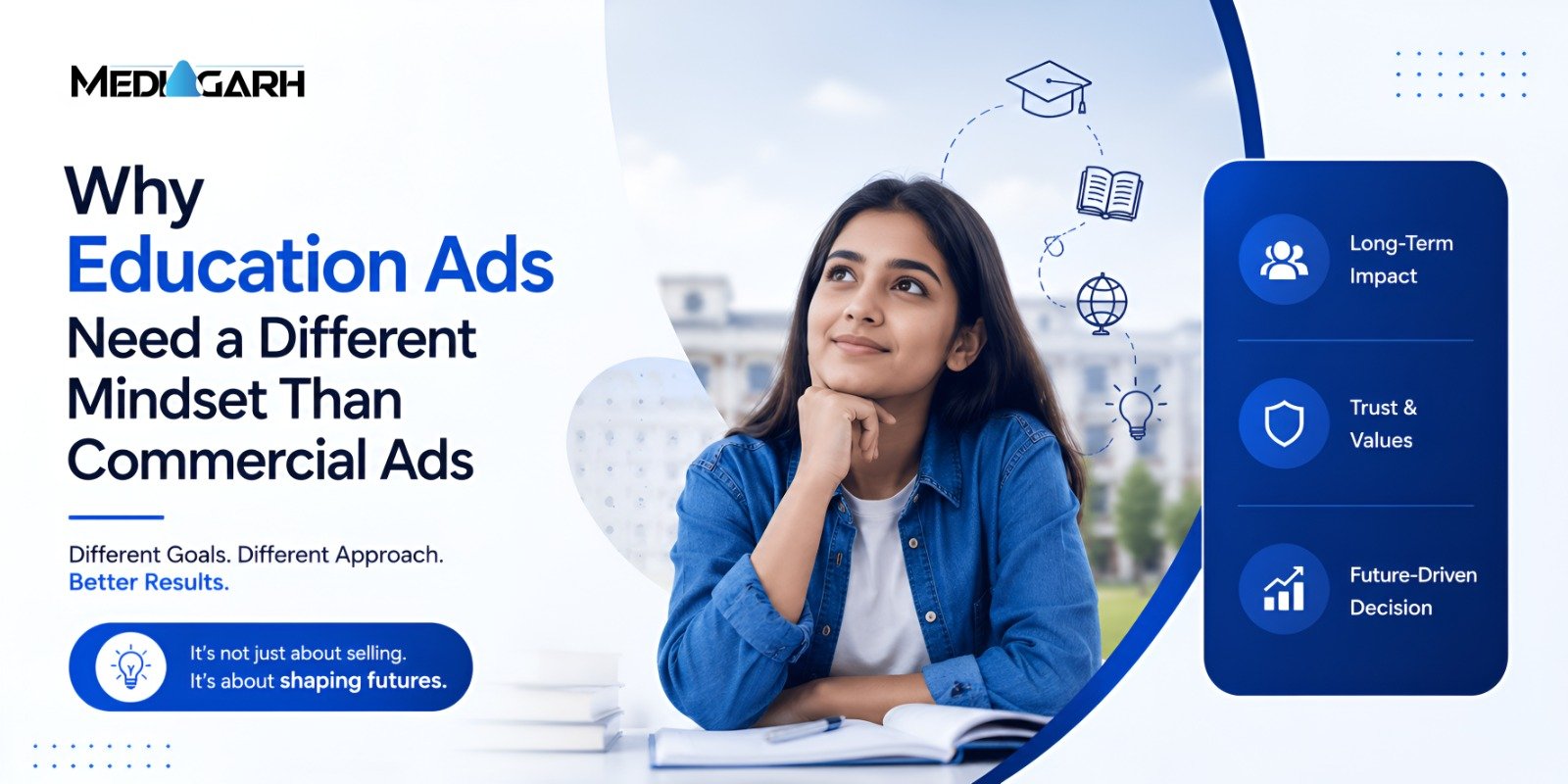
Do you know why your educational institution’s ads are not performing? It’s because you are treating them like any other commercial ad. Educational ads don’t work like normal commercial ads. It’s very easy to understand—just think of yourself as a parent or student. Would you treat buying a product the same as admission for your child? No, right? Because the decision journey is completely different. There is a lot more friction when it comes to admissions, and it is very different than an impulse purchase.
Yet, after this simple logical argument, educational institutions fail to realize it in their efforts and keep commercial-equivalent advertising efforts. In this blog, we’ll dive deep into the mindset that goes behind education ads used by education lead generation companies in India, and how they are different from the usual commercial ads.
Education Is a High-Involvement Decision
To understand the mindset, let’s see what the difference is between low- and high-involvement decisions.
| Low-Involvement Decision(Examples: clothing, gadgets, or food delivery) | High-Involvement Decision(Examples: choosing a school or college) |
| Low financial risk | Significant financial commitment |
| Immediate satisfaction | Long-term impact |
| Minimal research | Considerable research |
| Quick decisions | Emotional investment by multiple decision-makers |
The simple point we are trying to make with this explanation is that high-involvement decisions carry a higher responsibility. And marketing should change with this responsibility. If you are still tailoring your advertising efforts, like product purchases, for instance, you should not expect a huge lead turnover.
Commercial Advertising vs Education Advertising
| Commercial Advertising | Education Advertising |
| Quick purchase decisions | Long decision cycle |
| Usually one buyer | Parents, students, and family influence the decision |
| Focus on features and offers | Focus on trust, outcomes, and credibility |
| Immediate conversion | Gradual relationship building |
| Discounts create urgency | Confidence creates action |
Parents Buy Trust Before They Buy Education
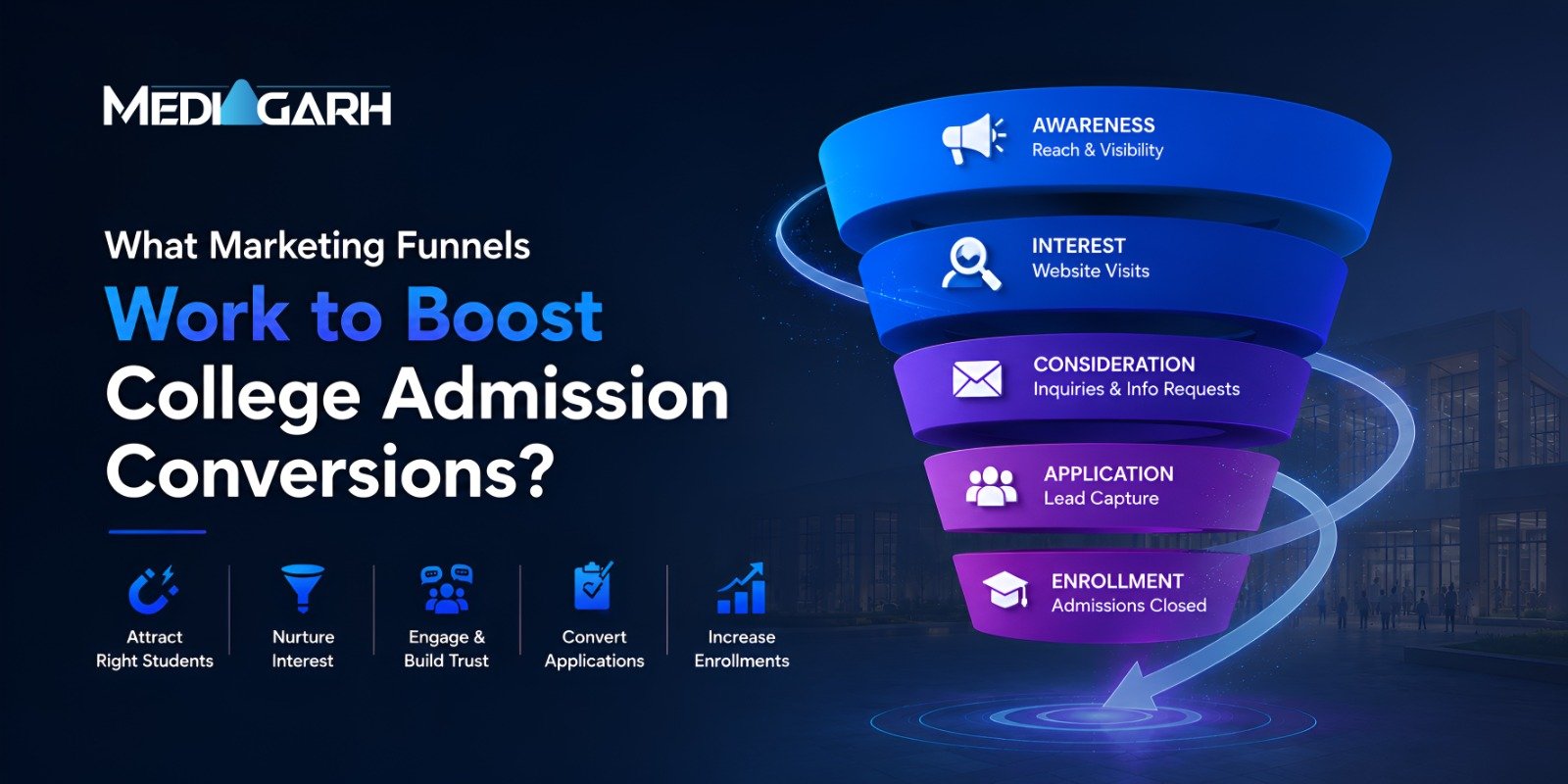
The heading for this section is a simple explanation of the funnel that education marketing follows. Before parents fill out the simplest form for your school, they have multiple questions:
- Is this school safe?
- Will my child receive individual attention?
- Are the teachers experienced?
- Will this institution prepare for the future?
- Is the investment worth it?
These go beyond the traditional concepts of “marketing.” It’s not about selling, but building gradual trust with:
- testimonials,
- student success stories,
- faculty introductions,
- campus experiences,
- and clear communication.
Why Commercial Advertising Tactics Often Fail in Education
- Overusing Urgency: Admissions aren’t urgent in their initial stages. They are an eventual action after multiple stages of awareness, interest, and desire. This does not mean you get rid of urgency completely—it is an essential component of advertising. But use it in moderation because someone will rarely choose an institution because “seats are filling fast.”
- Focusing Only on Features: A feature is the technical description of what you offer. These are like product specifications and won’t appeal to a common user. Try to highlight the deeper layer of the feature that answers the question: “How will this benefit me/my child?” For example: air-conditioned campus for the most comfortable learning experience.
- Leading with Promotions: Even in education ads, offers are a great attraction. But price shouldn’t be your only USP. Scholarships and fee benefits are rarely the factors because the final decision is based on other factors.
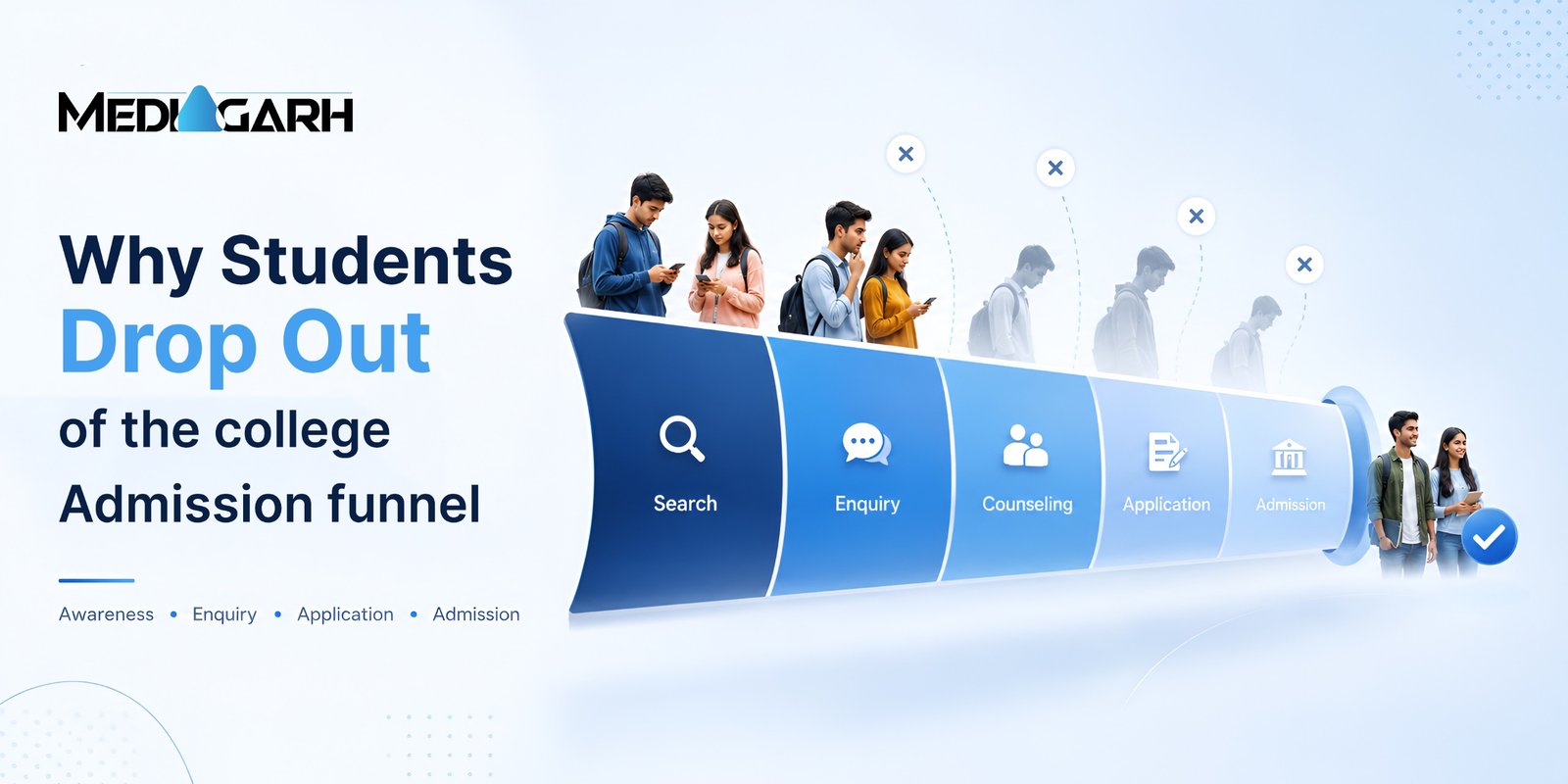
Understanding the Education Decision Journey
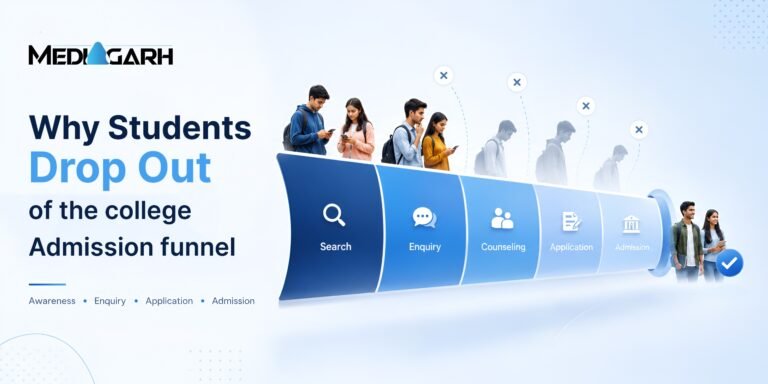
| Stage | Lead Focus | |
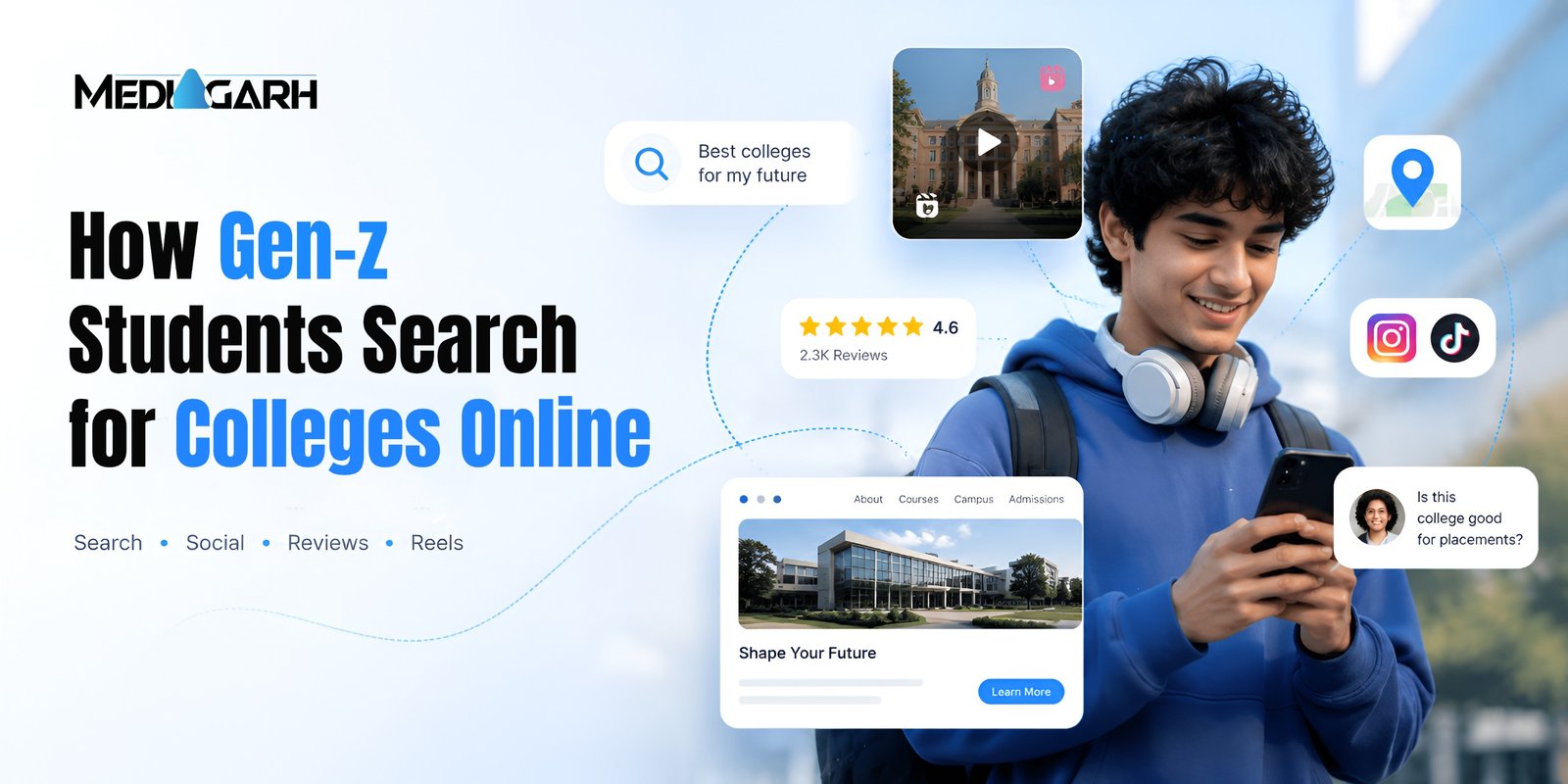
| I | Awareness | Discovery through social media, Google searches, educational blogs, or recommendations |
| II | Research | Comparison between curricula, facilities, placements, rankings, reviews, and fee structures |
| III | Trust Building | Proof consumption of testimonials, alumni success stories, campus videos, faculty profiles, and student achievements |
| IV | Validation | Human touch with counselling sessions, campus visits, family discussions, and financial planning |
| V | Admission | Student enrollment after full confidence |
Three Immediate Changes Institutions Can Make
- Replace Promotional Messages with Helpful Messages
Helpfulness and an informative nature will always help you get more success than blatant marketing. - Show Proof Instead of Making Claims
Anyone can claim to be “the best.” You should focus on proving the “why” behind your claim. - Measure Relationships, Not Just Leads
Marketing isn’t just about lead automation services in India. Monitor all audience touchpoints to indicate growing trust and lead to stronger admissions later.
Final Thoughts
Education marketing is fundamentally different from the usual commercial advertisements. The decision is different, the motivations are different, and so should be the marketing. So, instead of just focusing on urgency and other commercial tactics, focus on securing admissions through trust, consistency, and meaningful communication. This is a lesson from the best Google Ads agency in India for education institutes: education ads don’t succeed by convincing people to buy. They succeed by giving people enough confidence to believe they’ve found the right place to learn, grow, and succeed.