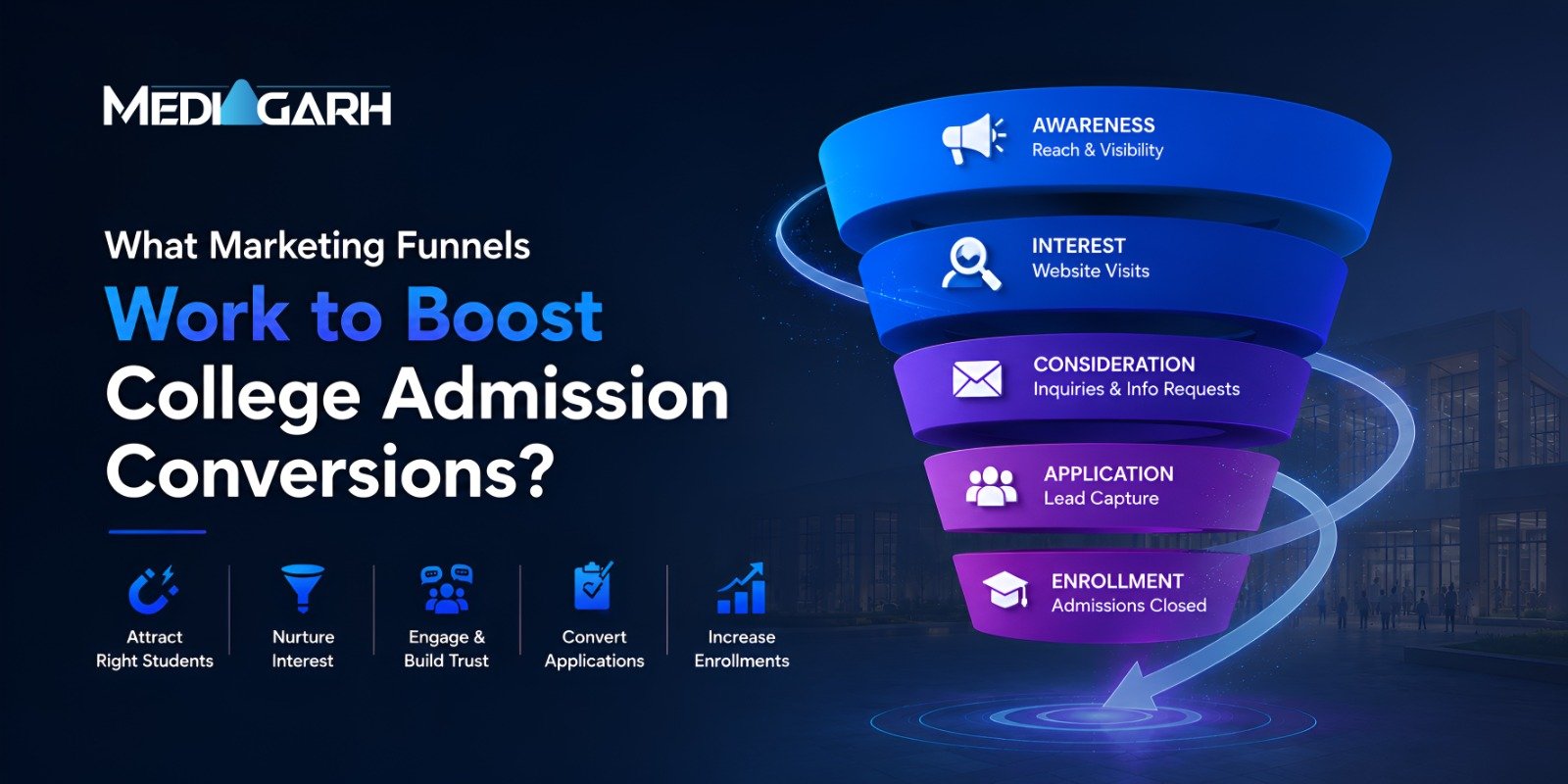
Do you know the fundamental difference between the marketing campaigns of a high-admission and a low-admission college? It’s not creative, it’s not audience targeting, and it’s not campaign budget or lead volume. The underlying difference goes beyond those—marketing funnels.
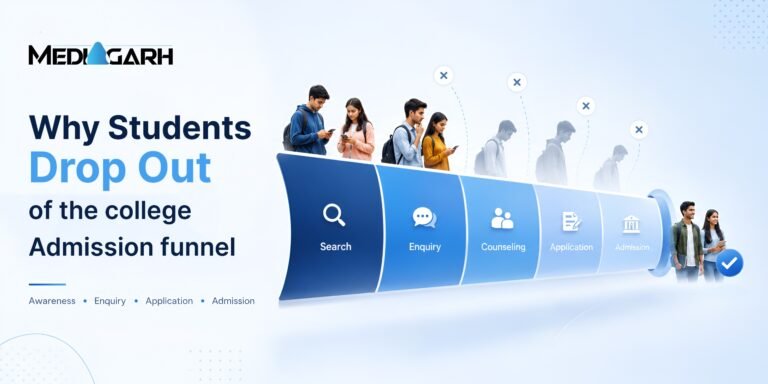
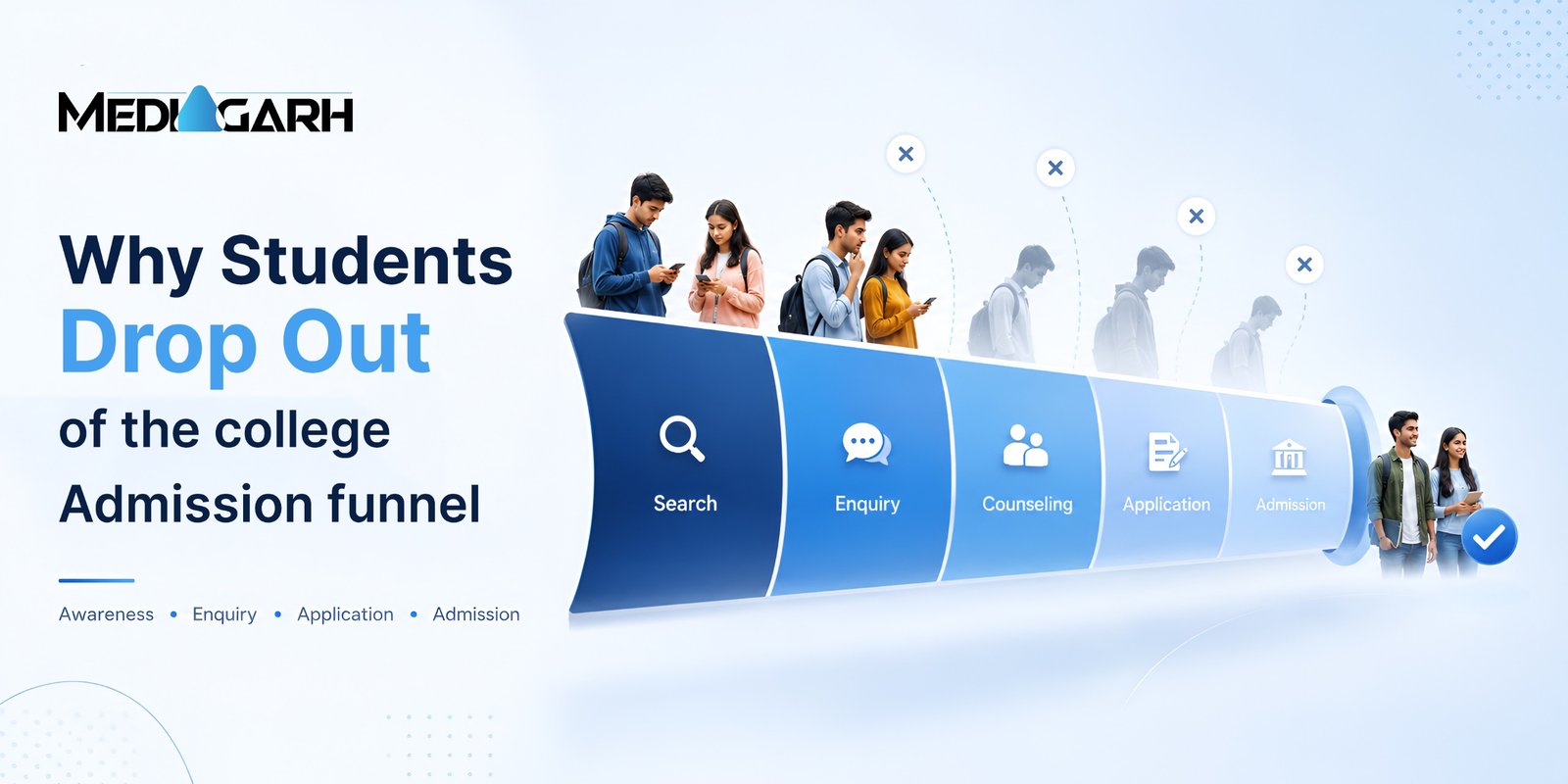
A marketing funnel, originally known as the purchase funnel, is a consumer-focused model that depicts the customer journey towards a product or service. For colleges, that would mean the first instance from when the student gets to know about them to final admission. Without a funnel, you miss stages that cost you numerous leads losing interest. Today, we’ll be discussing what an ideal funnel looks like and the best education digital marketing funnels that actually work for colleges.
The Ideal College Admission Funnel
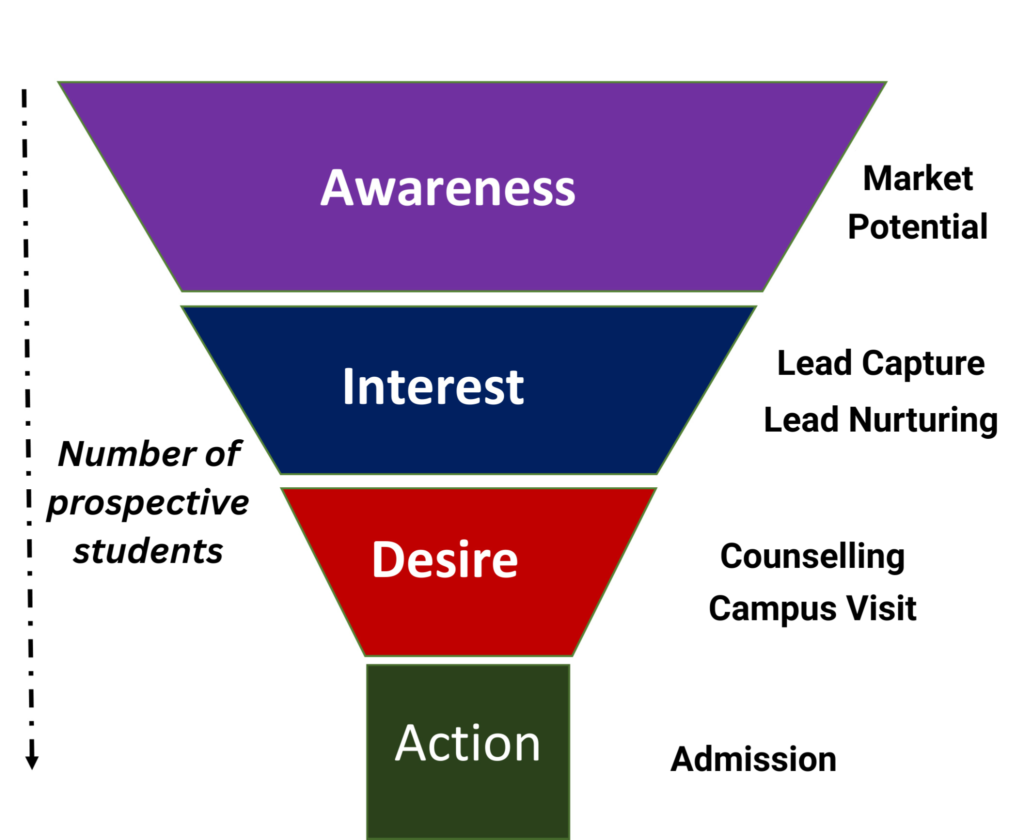
Purchase Funnel by BronHiggs (adapted for college admissions)
Stage 1: Awareness
At this stage, students don’t know about your institution. So much so, they don’t even know if it exists or not. Your goal? To become visible where students spend their time. This would mean prioritizing what content actually works for school and college marketing:
- Google Search – course explainers
- Instagram – student success stories
- Facebook – campus life videos
- YouTube – industry insights
- Educational blogs – career guidance articles
The goal is: education > promotion.
Stage 2: Interest
This is the point where students actually start taking interest in your institution, course, etc. This is the research phase, and they will stumble around your website, courses, facilities, videos, and everything they can find. At this stage, you need to start placing your brand and provide clarity to students. For successful implementation, offer free resources:
- downloadable brochures,
- placement reports,
- faculty profiles,
- campus tours,
- FAQs.
Stage 3: Lead Capture
The aim of providing useful information for free is to get students motivated to connect with you. A form is the best way to get admissions leads for colleges, but avoid making it too lengthy. You can offer simple actions such as:
- Enquire Now
- Download Course Brochure
- Book a Counselling Session
- Check Scholarship Eligibility
- Schedule a Campus Visit
Friction ↓ Enquiry Rate ↑
Stage 4: Lead Nurturing
This is, by far, the biggest contributing factor when it comes to lost college admissions. An enquiry doesn’t mean it is guaranteed to convert into admission. Students need to be constantly nurtured before they are expected to convert into admissions. This nurturing sequence may include:
- personalised emails,
- WhatsApp updates,
- webinar invitations,
- student testimonials,
- placement stories,
- faculty introductions,
- admission reminders.
Stage 5: Counselling
Counselling is one of the most crucial stages of the funnel. Most students are confused about how they should move forward in their journey. A counseling intervention in the funnel helps deal with the objections about:
- fees,
- placements,
- hostel facilities,
- scholarships,
- internships,
- career opportunities.
Stage 6: Campus Visit
Students are more likely to apply for admission if they have been campus visitors. It offers them the real experience they will be witnessing if they are admitted as students there. In fact, you can even invite parents to:
- explore classrooms,
- meet faculty,
- interact with current students,
- experience the campus environment.
Stage 7: Admission
The only goal in this stage is to reduce any friction. If the students have been through the previous six stages, adding friction might mean losing them. Therefore, keep the admission process simple, transparent, and quick. Avoid unnecessary paperwork or delays that could create frustration.
Four Marketing Funnels That Actually Work for Colleges
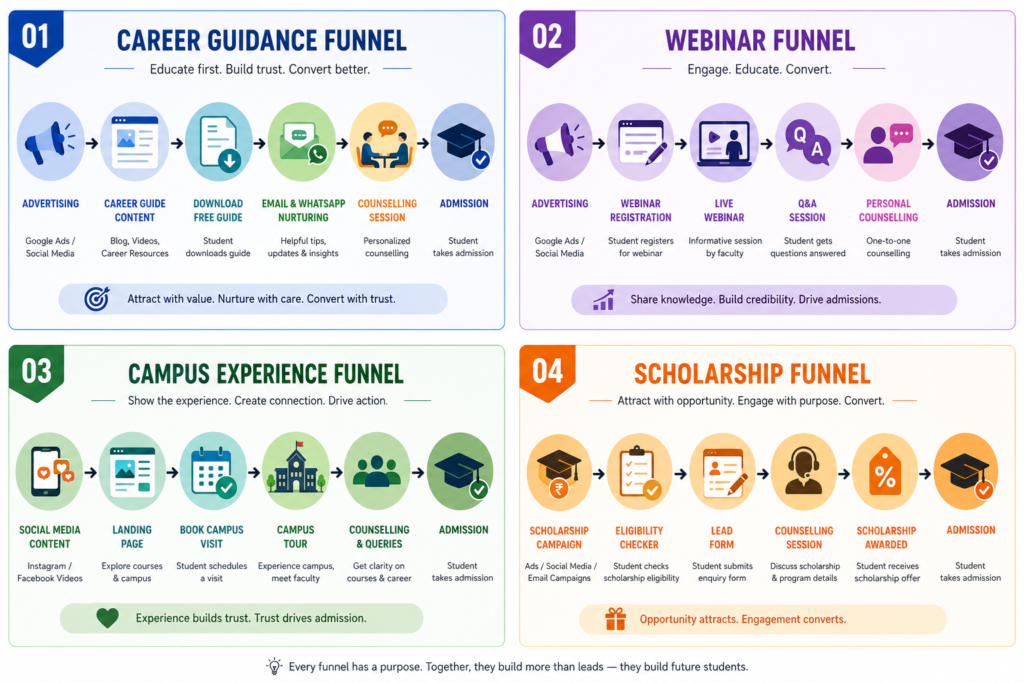
Marketing funnels for college admissions
- The Career Guidance Funnel
Since most students are confused about career options, you can lead them towards admission by providing the essential guidance. This works best for undergraduate or career-oriented programs, placing you as the trusted advisor.
Funnel Flow
Google Ads/Social Media → Career Guidance Blog/Video → Download a Free Career Guide → Email & WhatsApp Nurturing → Counselling Session → Admission
- The Webinar Funnel
Webinars are a highly popular way to attract students to your MBA programs, executive education, professional certifications, and specialized courses. These are great because it established creativity initially only.
Funnel Flow
Advertisement → Webinar Registration → Live Session with Faculty → Question & Answer Session → Personal Counselling → Admission
- The Campus Experience Funnel
As we mentioned, campus visitors are highly likely to take admissions because they have already experienced what they are signing up for. This admission marketing strategy is great for private universities and residential campuses.
Funnel Flow
Instagram/Facebook Video → Landing Page → Book a Campus Visit → Campus Tour → Admission
- The Scholarship Funnel
This is among the highest-converting admissions funnels, especially during admissions season. This is a flip to discount marketing, which is generally discouraged for colleges. You offer condition-based scholarships (which feel like earning/winning), which can further encourage meaningful conversations.
Funnel Flow
Scholarship Advertisement → Scholarship Eligibility Checker → Lead Form → Counselling → Admission
A Quick Funnel Health Check
Ask yourself these questions:
☐ Do you capture every enquiry?
☐ Do you respond within minutes?
☐ Do you nurture undecided students?
☐ Do you showcase testimonials and placement success?
☐ Do you encourage campus visits?
☐ Do you measure admissions by lead source?
If the answer to most questions is “No,” your funnel might be limiting your admission conversions.
Final Thoughts
If you are advertising without a clear funnel strategy for colleges, you are blatantly burning money. Just advertising won’t bring in admissions. It is just the first step. Your marketing efforts should consist of a step-by-step, planned funnel that flows from your first impression to enrollment. In fact, funnels are one of the integral parts of education marketing services. Because it builds trust, answers questions, removes uncertainty, and helps students make confident decisions.