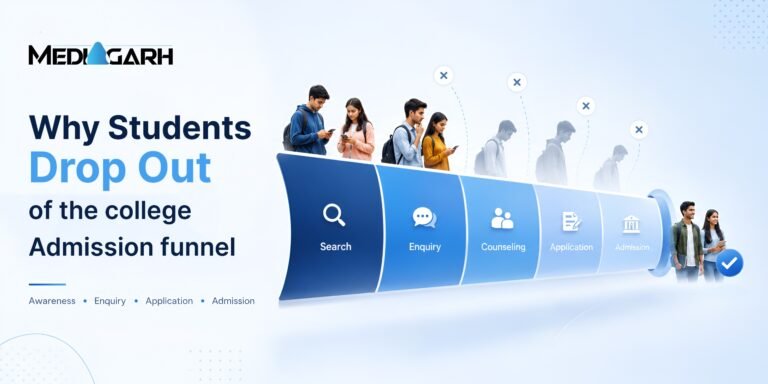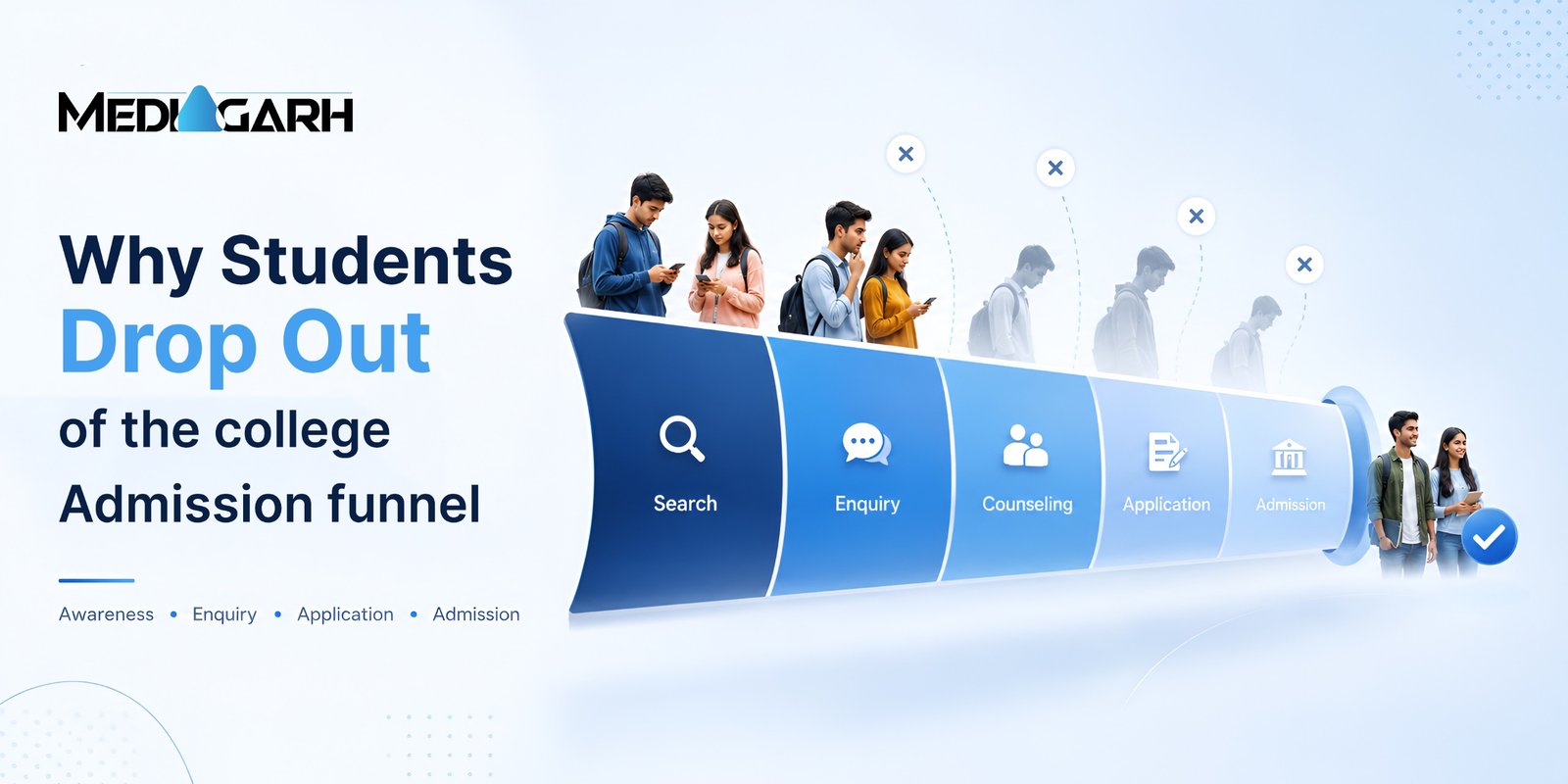
For any school, college, or coaching academy, finding leads is one of the toughest parts of the admission process, while converting them is another. The leads typically come from an inquiry form on the website or an advertisement on Google or other social media platforms. However, getting leads in these ways does not mean they are locked for admission, as that’s a considerably long process where many counsellors fail. Across the field, institutes suffer from poor conversion rates and fail to capture the reason behind the same.
What Are You Doing Wrong?
If you are failing to get admissions while the deadline is coming closer, there are several mistakes you are making in the process of lead conversion, particularly during follow-ups. Later, it becomes a reason why a lead generation agency for colleges is needed. Below are the most common reasons follow-ups fail in school and college admissions.
1. Making Limited Attempts
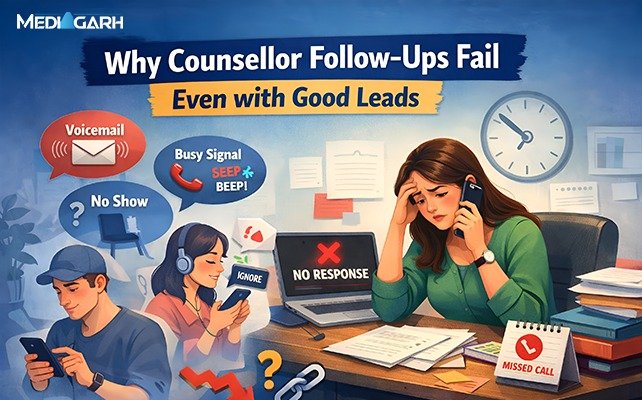
Many follow-up calls go unanswered, after which you typically assume that the lead is not interested, which may not always be the right guess. Stopping after 1 or 2 such calls made at the same time is the wrong approach. As per studies, 80% of conversions require at least 5 follow-up attempts. The common problems associated with such an approach include:
- Giving up after 1–2 unanswered calls
- Not leaving a voicemail or message
- Not trying at different times of the day
2. Lack of Professionalism
A poorly structured follow-up call made during improper hours or with a poor tone can harm the trust of parents or students. Signs of unprofessional follow-ups are:
- Calling without reviewing the student’s inquiry details
- Providing inconsistent fee or eligibility information
- Speaking in a hurried or pushy tone
3. Dependence on a Single Mode of Contact
It is important to understand that just calling is not the only way to follow up with a lead, as methods like email or message should also be put to use. According to reports, leads are 40% more likely to respond to a phone call if it is immediately followed by a personalized SMS or WhatsApp message. The many limitations of single-channel follow-up are:
- Students may avoid unknown numbers
- Working parents may prefer WhatsApp or email
- SMS or email reminders often perform better for documentation sharing
4. Not Providing Real Value in Every Follow-Up
When you call a student or a parent regarding admission, they expect to get an answer to why to take admission at your institute instead of constant reminders about doing so. Hence, when follow-ups lack value, they feel like pressure rather than support. The common signs of low-value follow-ups:
- Repeating the same generic pitch in every call
- Asking for decisions without solving pending doubts
- Not sharing relevant updates about scholarships or deadlines
- Sending template messages without personalization
5. Occupying Too Much Time of the Lead
Not occupying the unnecessarily too much time of the lead, neither with your emails nor messages, should be a cornerstone of your institute’s digital strategy. Additionally, your follow-up efforts to convert a good lead should involve balancing information delivery with attention span and decision readiness. Common mistakes include:
- Talking too much about the institution’s history
- Discussing all programs instead of focusing on the relevant one
- Forcing immediate campus visit commitments
- Interrupting parent concerns
6. Unplanned Follow-Ups
One of the biggest operational mistakes in admissions teams is the absence of a structured follow-up plan. Following up daily can irritate the lead, while ignoring them for a long time can make them forget about you. Hence, planning with the help of CRM systems (Customer Relationship Management tools) can surely improve your planning. Without planning:
- Counsellors forget previous conversation details
- Messages become repetitive
- There is no progression toward decision-making
- The lead feels pressured rather than guided
7. Improper Guidance of the Process
Many leads are genuinely interested but confused about the further steps of the admission process, which is the job of a counsellor. On failure in doing so, the lead will be wasted as confusion reduces conversion. Improper guidance leads to:
- Missed document deadlines
- Incomplete applications
- Confusion about eligibility
8. Poor Coordination Between Teams
Sometimes follow-ups fail because of internal miscommunication between multiple counsellors in the team, which instantly leads to loss of trust among leads. The effect on the admission process due to miscommunication includes:
- Delays in document verification
- Conflicting messages about different aspects
- No escalation system for complex queries
Conclusion
Getting good leads is a positive sign for your marketing strategy, but failure to convert them due to follow-ups is a major concern. By adopting a systematic, respectful, and multi-channel follow-up approach, institutions can significantly improve admission outcomes while maintaining trust and credibility.
At the same time, many institutes need the help of agencies to attract leads and convert them successfully through effective strategies. If your institute needs help with the same, contact Mediagarh, one of the most trusted EdTech marketing agencies in India.
FAQs
Q. How to follow up using WhatsApp?
To follow up using WhatsApp, you should use attractive creatives with a to-the-point message that can catch the attention of the lead and make them respond.
Q. Why is it important to follow up consistently with a lead?
It is important to follow up consistently with a lead to address their concerns, guide them through the admission process, and provide them with the solution to every barrier that lies in their way of taking admission in your school or college.
Q. When should a counsellor respond to an admission inquiry?
It is recommended that a counsellor respond to an admission inquiry by a lead within 24 hours of receiving that inquiry.