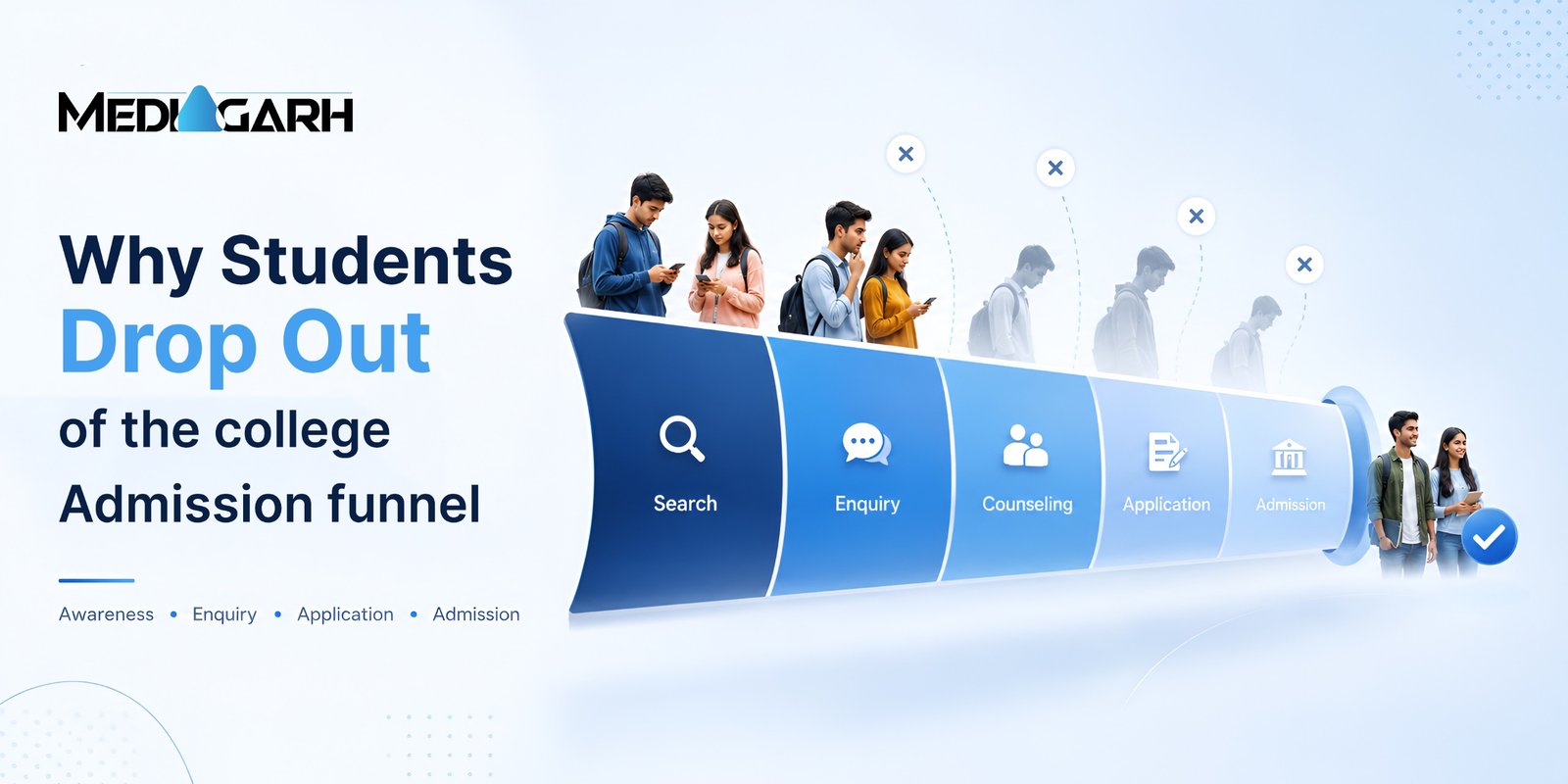
If you handle marketing for a school or college, you have definitely faced issues with what content to post. This issue primarily arises because there are only limited high-quality references for school & college content. Currently, you might be sharing photos of events, celebrating achievements, and posting announcements. But let’s be real: that absolutely doesn’t work—few likes & comments, and no enquiries. Content definitely works for schools and colleges, but they fail to align with parents’ and students’ decision-making processes. Let’s understand what school & college marketing content ideas actually work and why.
Why Most Educational Content Fails
Most digital content for education marketing falls into the following categories:
- Event photos (annual day, sports day, celebrations)
- Generic announcements (“Admissions Open”)
- Random social media posts
- Inconsistent posting schedules
The issue with such content is that it doesn’t clearly articulate a value proposition to the audience—that’s why it rarely leads to enquiries.
The Key Insight: Content Must Match the Decision Journey
All content should be attributed to one of the following audience journeys:
- Awareness — discovering options
- Interest — exploring possibilities
- Trust — evaluating credibility
- Comparison — shortlisting institutions
- Decision — taking action
Let’s look at different content examples relevant to each step of the journey.
- “Help Me Understand” Content (Awareness Stage)
At the awareness stage, the audience wants clarity about the problem at hand, not about institutions. Such content helps them clear doubts about basic things, including choosing the right school and the best career options after 12th. The best content in this stage is educational blogs, simple explainer videos, and informative social posts. The best part about this content is that you can get traction just by providing simple information.
- “Help Me Decide” Content (Consideration Stage)
In this form of content, you are helping the audience with comparison. Here, you clearly establish the differences between a good and an average institute, and slightly favour yourselves a bit. Content like “What makes our school different,” program-specific content, and other content that helps the audience understand your institute. The goal is just to bring them closer to enquiry.
- Trust-Building Content (The Most Important Layer)
Trust is the most important factor in educational decision-making. It is about a student’s complete future. You can simply upload parent testimonials, student success stories, alumni achievements, and faculty introductions to help the audience connect with your brand. It reduces uncertainty and builds confidence.
- Process Clarity Content (Removes Friction)
In the later stages, when the audience is fully sold on your institute’s idea, the issue arises because the next steps are unclear. “How-to” content that clarifies the admission process and fee structure will improve conversion rates.
- Campus & Culture Content (Emotional Connection)
You have to understand that you are not just selling the academics, but the experience. Your content should also show classroom interactions, student life, activities and events, and overall atmosphere to give your audience a virtual representation of what life will be like at your institute.
- Objection-Handling Content (Highly Underrated)
Objections are real questions/doubts that parents have about your institute. It is surprising to see that schools & colleges are not answering simple questions about safety, academic pressure, career outcomes, and suitability for the students. This content gives you a clear lead over other promotional content.
- Retargeting Content (For Conversion Stage)
One campaign might fail to generate a final conversion after a lead. Your audience is human and needs reminders, reassurance, and reinforcement. You must use testimonials, campus tours, FAQs, and reminder posts to retarget the audience for final decision-making.
A Simple Content Framework for Schools & Colleges
To make this practical, here’s a basic weekly education content marketing strategy:
- 2 educational posts (awareness)
- 1 trust-building post (testimonials/stories)
- 1 campus or culture post
- 1 admission-focused post
This ensures balance across all decision stages.
Final Thoughts
Getting better in content marketing isn’t about posting more, but posting quality content that directly speaks to your audience at the right time. When your content aligns with your audience, engagement improves, trust builds faster, and enquiries increase naturally. If you’re considering a marketing agency for colleges or schools, make sure their content strategy aligns with your audience.